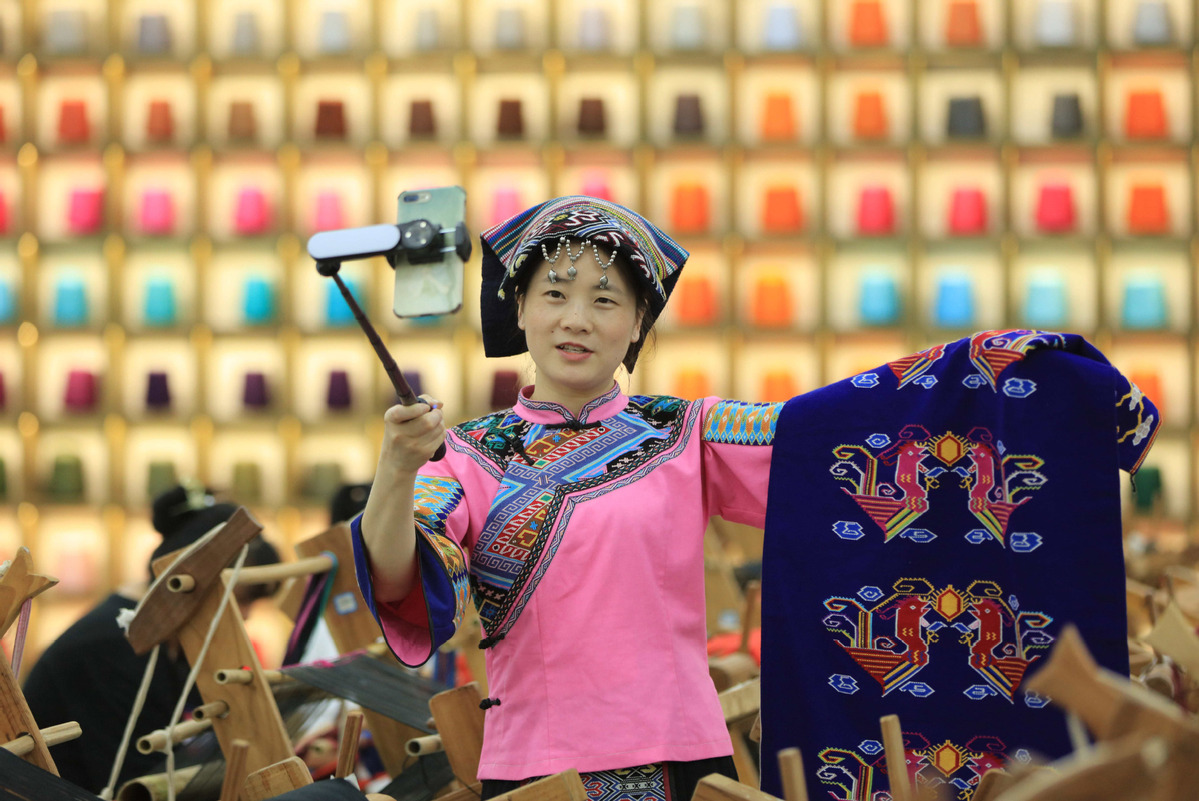
Tujia Ethnic Group
Introduction
The Tujia ethnic group, one of the 56 recognized ethnic groups in China, primarily resides in the mountainous regions of Hunan, Hubei, Guizhou and Chongqing. Known for their rich cultural heritage and distinct traditions, the Tujia people have preserved their unique customs, language, and arts despite the influences of modernization.
Language and Population
While many Tujia people have adopted Mandarin as their primary language, efforts are ongoing to preserve the Tujia language through cultural programs and initiatives. As of the latest census, the Tujia population is estimated to be around 9.6 million, making them one of the largest ethnic minorities in China.
Cultural Practices
Tujia Embroidery
Embroidery is an integral part of Tujia culture, traditionally practiced by women as a fundamental skill. Tujia embroidery is characterized by its intricate patterns and vibrant colors, often depicting elements of nature and daily life. Zhou Yinju, a provincial inheritor of Tujia embroidery, showcases this art form through various traditional items like shoes and insoles, highlighting its cultural significance.
Tujia Dance and Music
Dance and music are vital components of Tujia cultural expression. The Hand-Waving Dance, also known as Baishou Dance, is a traditional Tujia dance that dates back nearly a thousand years. It incorporates elements of singing, dancing, and music to narrate historical and mythological stories, reflecting the Tujia people's connection to their land and ancestors.
The Maogusi Dance is another traditional performance, depicting scenes of farming, fishing, and hunting to celebrate the Tujia's ancestral history. These dances are often accompanied by traditional Tujia music, featuring instruments like the suona and various percussion tools.
Sheba Festival
The Sheba Festival is one of the most significant traditional festivals for the Tujia people, celebrated to worship ancestors, celebrate the harvest, and pray for blessings. This festival includes performances of Tujia ethnic folk music, Hand-Waving Dance, and other cultural showcases, offering a vibrant display of Tujia heritage.
Architecture
The Tujia are known for their distinctive stilt houses, or diaojiaolou, which are built to accommodate the steep terrain of their homeland. These wooden structures are designed to protect against humidity and wildlife, reflecting the Tujia's adaptation to their environment.
Traditional Crafts
Tujia brocade, or xilankapu, is a traditional craft representing the Tujia's artistic prowess. Recognized as a national intangible cultural heritage, the brocade is created through a meticulous process involving hand-spinning, knotting, and weaving.
Tourism and Cultural Preservation
Regions like the Xiangxi Tujia and Miao autonomous prefecture are popular tourist destinations, offering a glimpse into the Tujia's rich cultural landscape. Attractions such as the Laosicheng Site, a UNESCO World Heritage site, and the scenic beauty of Zhangjiajie and Wulingyuan highlight the Tujia's historical and natural heritage.
Efforts to preserve and promote Tujia culture are evident through various cultural festivals, craft exhibitions, and educational programs. These initiatives aim to sustain the Tujia's unique traditions while fostering greater understanding and appreciation of their cultural contributions.








